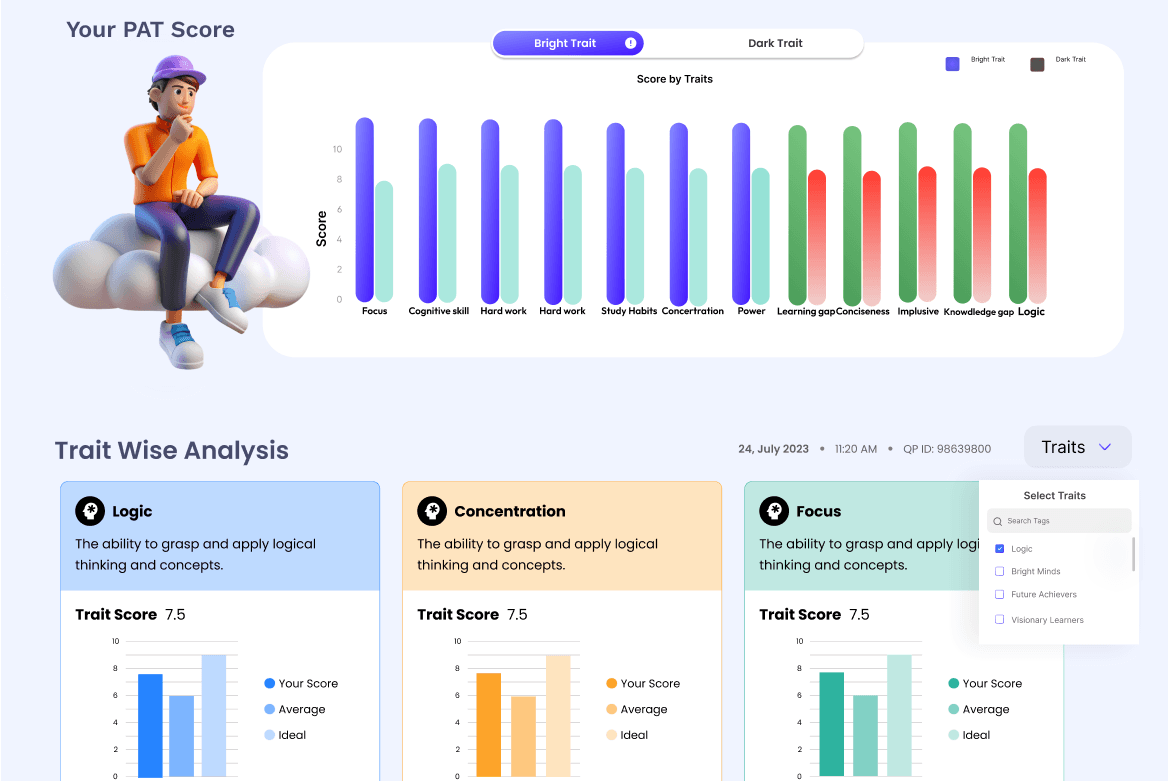
In Behavioural Trait Analysis, we divide these into two categories: Bright Traits and Dark Traits.
- Bright Traits = Strengths that help students learn better. The higher the score, the stronger the skill.
- Dark Traits = Weaknesses or barriers that make learning harder. The lower the score, the better it is for academics.
By recognizing both, students can maximize strengths and minimize obstacles.
Bright Traits (Good to Strengthen)
Bright traits are positive behavioural qualities that directly support effective learning. The goal is to keep building on these traits over time.
- Logic: Critical thinking, reasoning, and logical analysis for problem-solving.
- Concentration: Sustained mental effort and focus without distractions.
- Focus: Directed attention and ability to complete tasks.
- Cognitive Skill: Information processing, comprehension, and problem-solving abilities.
- Retention Power: Memory strength and recall of learned information.
- Hard Working: Perseverance, diligence, and commitment to consistent effort.
- Study Habit: Effective study routines, organization, and time management.
Why they matter:
Students with strong bright traits tend to stay motivated, retain knowledge better, and perform consistently across subjects.
Dark Traits (Good to Reduce)
Dark traits are behavioural tendencies that make studying harder. The aim is to bring these scores down so they don't interfere with learning.
Why they matter:
High dark trait scores can lead to inconsistent performance, frustration, and wasted effort. Reducing them helps students unlock their true potential.
Why This Distinction is Important
Your Next Step: Know Yourself, Improve Yourself
Bright traits show your strengths. Dark traits reveal your challenges. Together, they create a personal blueprint of how you learn.
With Behavioural Trait Analysis, students can: